


Conditions
Gallstone Treatment in Charlotte
Expert diagnosis and effective treatment for symptom relief
Gallstones can be silent for years — but when they block your bile ducts, they become a medical emergency that requires immediate care.
Know the condition
Understanding Your Condition
Gallstones are hard particles that form in the gallbladder due to an imbalance in bile composition. They range in size from a grain of sand to a golf ball, and while many people have them without symptoms, a blocked bile duct can cause a serious, potentially life-threatening gallbladder attack. Our gastroenterologists provide gallstone diagnosis and treatment across the Charlotte area, including our Huntersville and Mooresville locations.

Castle Connolly
Top Doctors
KEY SYMPTOMS
Recognizing Symptoms
Gallstones are silent until they're not — know the signs of an attack.
Gallstones themselves don't cause symptoms. But when one blocks a bile duct, the resulting gallbladder attack has clear and serious symptoms. If you're experiencing any of the following, seek medical care immediately — these symptoms can indicate a life-threatening blockage.
Intense Abdominal Pain
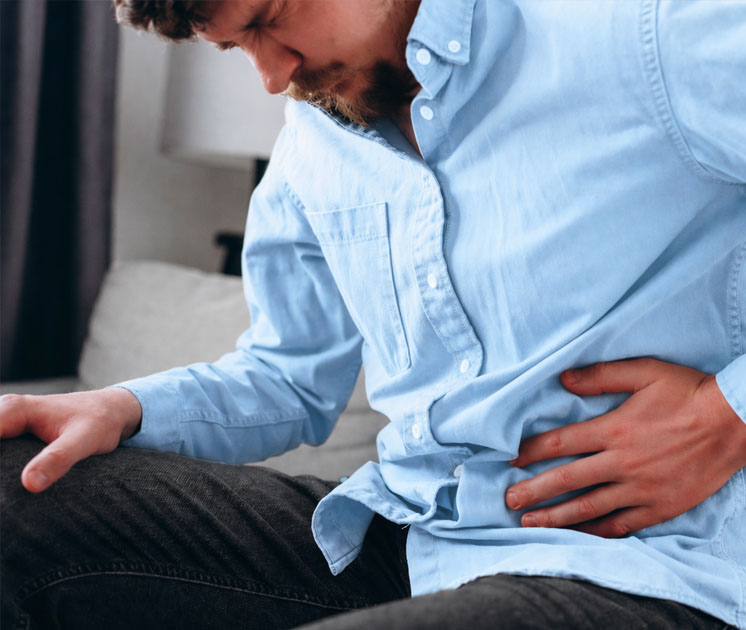
Sudden, severe pain in the upper-right or center of the abdomen lasting longer than five hours is the hallmark symptom of a gallbladder attack caused by a blocked bile duct.
Upper Back Pain
Pain radiating to the upper back between the shoulder blades frequently accompanies a gallbladder attack and can feel similar to a muscle or spinal issue.
Nausea & Vomiting
Nausea and vomiting are common during a gallbladder attack as the body responds to the blocked bile duct and associated inflammation.
Fever & Chills
A fever accompanying abdominal pain suggests an infected or inflamed gallbladder — a serious complication requiring urgent medical treatment.
Jaundice
A yellowish tint to the skin or whites of the eyes indicates that bile is backing up into the bloodstream due to a blocked bile duct — a sign of a serious, urgent complication.
Tea-Colored Urine & Light Stools
Dark urine and pale or clay-colored stools are signs that bile flow is obstructed and not reaching the digestive tract normally — seek medical attention right away.
Causes & Risk Factors
What Causes Gallstones?
Gallstones form when the substances that make up bile become imbalanced. While scientists aren't certain why these imbalances occur, several risk factors increase your likelihood of developing them.
Gallstones form when bile contains too much cholesterol, too much bilirubin (a byproduct of the liver), or not enough bile salts — the substances that help digest fat and absorb nutrients. These imbalances cause particles to crystallize and harden into stones over time.
- Being female
- Age 40 or older
- Family history of gallstones
- Obesity
- Rapid weight loss
- Conditions affecting nutrient absorption (e.g., Crohn's disease)
- High-calorie diet rich in refined carbohydrates
- Metabolic syndrome, diabetes, or insulin resistance
- Hispanic descent
- Cirrhosis
- Severe hemolytic anemias (e.g., sickle cell anemia)
- Maintaining a healthy, stable weight (avoid rapid weight loss)
- Eating a balanced diet low in refined carbohydrates and saturated fat
- Managing blood sugar and metabolic conditions with your doctor
- Staying physically active to support healthy cholesterol levels
Treatment Options
Managing Gallstones
If gallstones aren't causing symptoms, treatment may not be needed. However, once a gallbladder attack has occurred, it's likely to happen again — and your doctor will recommend a plan to prevent future episodes and address any complications.

Laparoscopic Cholecystectomy
The most common surgery for gallstones. The surgeon makes small incisions and uses a thin camera to remove the gallbladder. Performed under anesthesia as an outpatient procedure — most patients go home the same day.

Open Cholecystectomy
Recommended when the gallbladder is severely inflamed, infected, or scarred. A 4–6 inch incision is made to safely remove the gallbladder. Expect to stay in the hospital up to a week, with about a month for full recovery.
ERCP (Stone Removal)
In specific cases, ERCP can be used to locate and remove gallstones from the bile ducts using a thin tube, camera, and small basket guided through the mouth. Charlotte Gastro performs ERCP at Novant Main and Matthews hospital locations.
Non-Surgical Treatment
When surgery isn't an option, oral dissolution therapy (medications that dissolve small cholesterol gallstones) or shock wave lithotripsy (breaking stones into smaller pieces) may be used. These are reserved for very specific cases where surgery carries too much risk.
Living Well After Gallstone Treatment
If your gallbladder has been removed, your body will adjust over time. Most people experience minimal disruption to daily life — especially with a few dietary adjustments in the weeks and months following surgery.
Diagnostic Process
Getting Your Diagnosis
If your doctor suspects gallstones are causing your symptoms, they'll order imaging to confirm their presence and assess any complications before recommending treatment.
- CT scan — provides detailed cross-sectional images of the abdomen
- MRI — used for complex cases or when soft tissue detail is needed
- HIDA scan (Cholescintigraphy) — assesses gallbladder function
- ERCP — used both diagnostically and therapeutically to locate and remove stones from bile ducts
FAQs
While gallstones themselves don't necessarily cause symptoms, they become problematic when they block your bile ducts. Warning signs include abdominal pain lasting longer than five hours (especially on the right side), nausea, vomiting, fever, or a yellowish color appearing on your skin or in your eyes.
Gallstones are caused by an imbalance in the substances that make up your bile, either too much cholesterol, too much bilirubin, or not enough bile salts. There's no definitive explanation for why these imbalances occur.
It's possible to pass small gallstones without treatment, but it's unlikely. Once gallstone attacks start, they commonly recur. If you're experiencing symptoms of a gallbladder attack, seek medical care as soon as possible.
If you're experiencing a gallbladder attack and don't seek treatment, your liver, bile ducts, or pancreas can be severely damaged. An untreated gallbladder attack can be fatal, so if you think you're experiencing one, seek medical care immediately.
Take the Next Step Toward Better Digestive Health
Our Rea Farms, Randolph Road, Huntersville, Mint Hill, and Mooresville offices offer diagnosis and treatment for gallstones. ERCP for gallstone removal is available at our Novant Main and Matthews hospital locations.
Have questions about insurance? Our team can verify your coverage and let you know what to expect for out-of-pocket costs.